Monitoring, Reporting & Verification (MRV)
Measuring Nature.
Building Trust.
Unlocking Opportunity.
Across the world, governments, conservation organisations, investors and local communities are making unprecedented commitments to protect forests, restore degraded land and build resilience to climate change.
But every one of those commitments depends on a single question:
How do we know it is really working?
Monitoring, Reporting and Verification (MRV) provides the answer.
MRV is the process of collecting, validating and communicating reliable environmental data so that decisions are based on evidence rather than assumption. It transforms observations into trusted information, allowing organisations to measure progress, demonstrate impact and continuously improve the way natural resources are managed.
As environmental finance expands and international climate commitments become more ambitious, robust MRV is no longer optional. It is becoming the foundation upon which credible conservation, sustainable agriculture and climate investment are built.
Why MRV Matters
Healthy ecosystems provide enormous value to society.
They store carbon.
Protect biodiversity.
Regulate water.
Support food production.
Improve air quality.
Strengthen resilience against climate change.
Yet many of these benefits remain difficult to quantify with confidence.
Without reliable measurement there is uncertainty.
Without confidence there is reduced investment.
Without investment, opportunities for both people and nature are lost.
High-quality MRV closes that gap by providing transparent, continuous evidence of environmental change.
Beyond Carbon
Although MRV is often associated with carbon markets, its value extends far beyond carbon alone.
Reliable environmental intelligence supports:
Forest conservation and restoration
Regenerative agriculture
Biodiversity monitoring
Water-resource management
Air-quality assessment
Climate resilience planning
Sustainable land management
National environmental reporting
Community-led conservation programmes
Evidence-based public policy
Every one of these activities becomes stronger when supported by trustworthy, continuously collected data.
From Observation to Intelligence
Traditional environmental monitoring has often relied upon periodic field surveys or satellite imagery.
Both remain valuable.
However, today's environmental challenges require richer, more continuous information.
Modern sensing technologies can now provide near real-time insight into local environmental conditions, while cloud platforms and artificial intelligence help transform millions of individual observations into actionable intelligence.
The result is not simply more data.
It is better decisions.
Local Knowledge. Global Confidence.
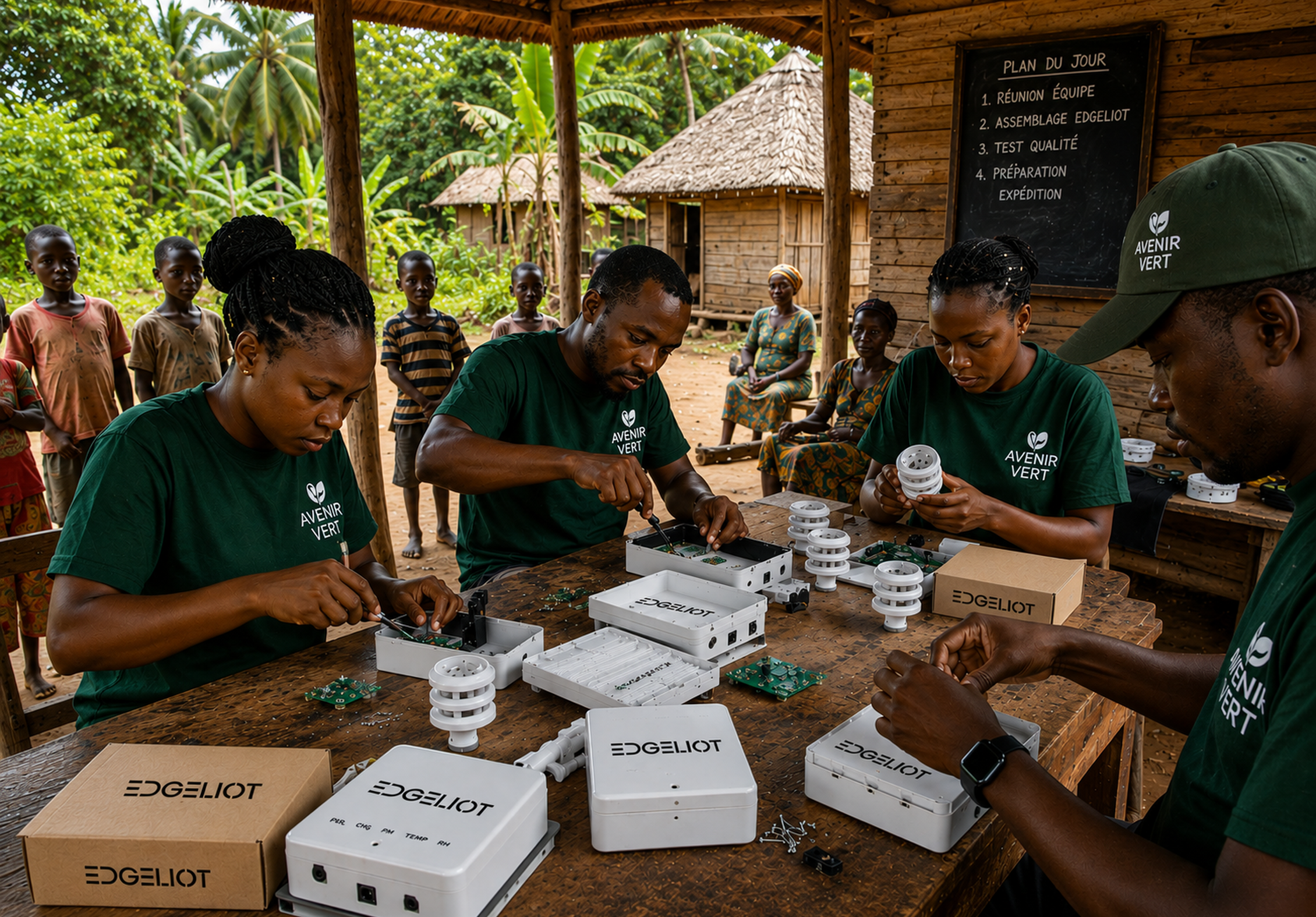
At Avenir Vert, we believe the strongest environmental data begins with the people who know the landscape best.
Communities are not simply beneficiaries of environmental programmes—they are essential partners in understanding, monitoring and protecting the ecosystems on which they depend.
By combining local expertise with modern environmental sensing technologies, we help create monitoring systems that are scientifically robust, operationally practical and locally owned.
This approach strengthens long-term sustainability while building technical skills, employment opportunities and environmental stewardship within the communities themselves.
Building the Evidence for a Sustainable Future
As climate finance grows and expectations for transparency continue to increase, organisations will increasingly need to demonstrate measurable outcomes rather than simply report good intentions.
High-integrity MRV provides the evidence that connects environmental action with environmental impact.
It builds confidence.
It supports better policy.
It attracts investment.
Most importantly, it helps ensure that the world's most valuable natural ecosystems are managed with the same level of intelligence, accountability and care that they deserve.