
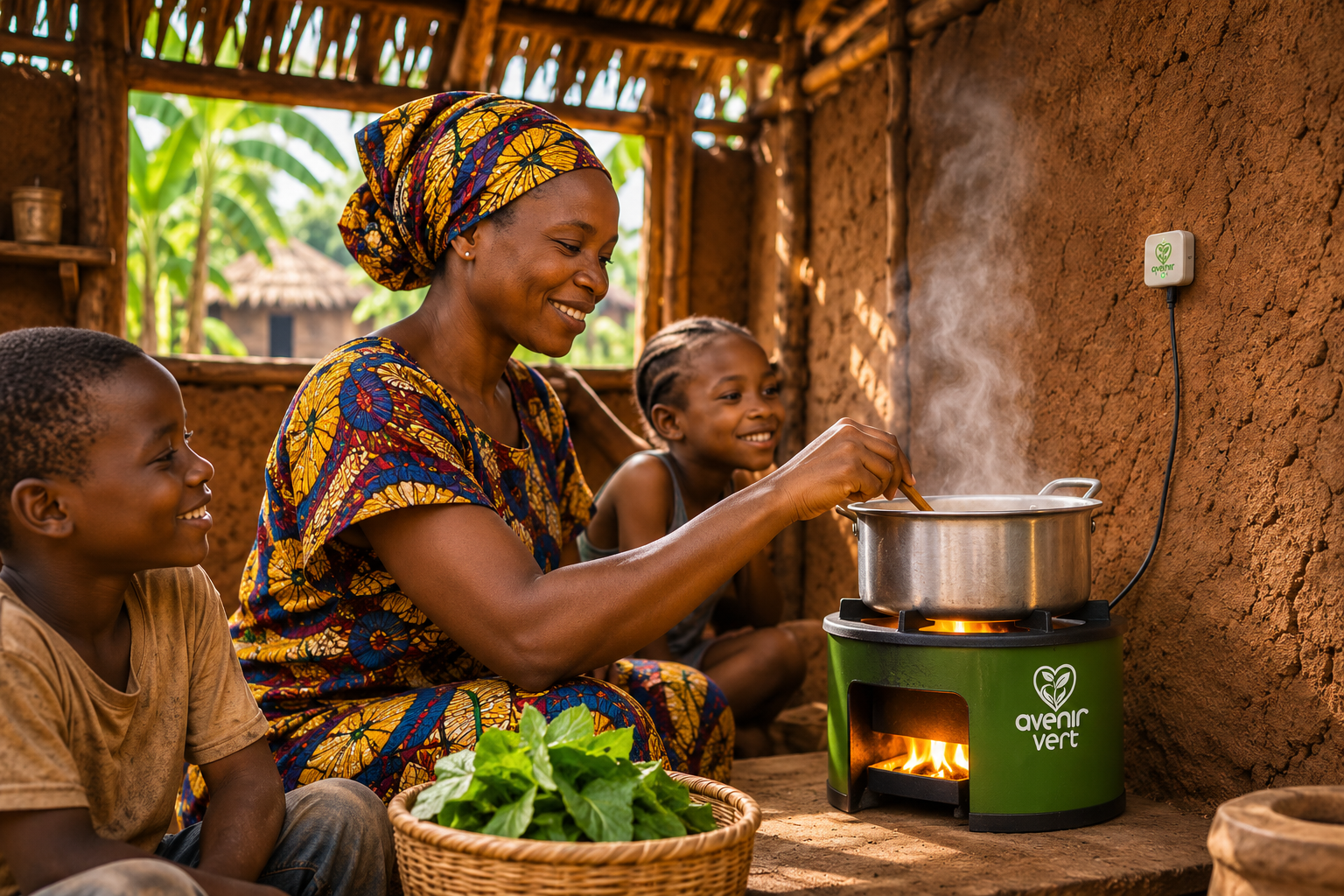
Clean cooking and bioenergy
Protecting Forests.
Improving Health.
Empowering Communities.
Across the Congo Basin millions of households depend on charcoal and firewood for their daily cooking needs.
This dependence on traditional biomass fuels places enormous pressure on the forests of the Congo Basin, while exposing families - particularly women and children - to harmful indoor air pollution.
The consequences extend far beyond the kitchen.
Forest degradation contributes to climate change and biodiversity loss. Smoke from inefficient cooking methods can damage respiratory and cardiovascular health. And the time and resources required to gather or purchase fuel place an additional burden on already vulnerable households.
Cleaner cooking offers an opportunity to address these interconnected challenges together.
A Healthier Home. A Healthier Forest.
Improved cookstoves and sustainable bioenergy solutions can reduce fuel consumption, lower harmful emissions and improve everyday living conditions.
For families, this can mean less smoke, reduced expenditure on fuel and a safer, more comfortable cooking environment.
For the environment, it can mean reduced pressure on surrounding forests and lower greenhouse-gas emissions.
For communities, it creates opportunities for local enterprise, technical training and more sustainable livelihoods.
But introducing cleaner technology is only part of the solution.
We also need to understand and measure the difference it makes.
From Cleaner Cooking to Measurable Impact
Avenir Vert sees an important opportunity to combine clean-cooking initiatives with modern environmental monitoring technologies.
By integrating indoor air-quality sensors and appropriate monitoring systems, clean-cooking programmes can generate valuable evidence about changes in household pollution, fuel use and environmental conditions.
This information can help:
Assess improvements in indoor air quality.
Monitor the adoption and effectiveness of improved cookstoves.
Support the measurement of fuel savings and emissions reductions.
Strengthen Monitoring, Reporting and Verification (MRV) for eligible carbon-finance programmes.
Provide evidence to guide future investment and programme expansion.
Where appropriate, robust monitoring can also support the development of high-integrity carbon-credit projects, subject to recognised methodologies and independent verification.
Connecting Community Wellbeing with Climate Action
At Avenir Vert, we believe environmental progress should deliver tangible benefits for the people who live closest to the ecosystems we seek to protect.
Clean cooking brings that philosophy into the home.
By combining practical technology, community participation and reliable environmental data, we aim to support solutions that improve daily life while contributing to the long-term protection of the Congo Basin.
Because protecting the world's great forests should also mean improving the lives of the people who depend on them.